When your AC is blowing warm air on a 95° Portland afternoon, it stops being a “comfort” issue and becomes a “how do we sleep tonight?” problem. The mix of heat and humidity we get in late summer can turn a stuffy house into a sauna fast, and waiting days for answers isn’t an option.
The good news: most “AC blowing warm air” problems come down to a short list of common issues. Some you can safely check yourself in a few minutes. Others need a licensed HVAC pro.
Below we’ll walk through 7 likely causes, how to troubleshoot them, and when to call in help so your air conditioner not cooling doesn’t ruin the next Portland heat wave.
Key takeaways
- Many warm-air issues are simple: thermostat settings, clogged filters, or a tripped breaker.
- Frozen coils, low refrigerant, or a bad capacitor require professional tools and training.
- Portland’s tree pollen, wildfire smoke, and mossy yards make dirty filters and outdoor units extra common.
- If your AC not blowing cold air coincides with weird noises, ice, or frequent cycling, shut it off and schedule AC repair.
- Undersized or aging systems may never cool well during 90°+ heat, even if nothing is “broken.”
Step 1: Start with the easy stuff
Before assuming the worst, walk through a few quick checks. These are safe for almost any homeowner and often solve the problem without tools.
1. Check your thermostat settings
If your air conditioner is not cooling, the thermostat is the first suspect.
Run through this checklist:
- Mode: Make sure it’s set to
COOL, notHEATorFAN. - Setpoint: Set the temperature at least 3–5°F lower than the current room temperature.
- Fan setting: Use
AUTO, notONwhile testing. - Battery: If it’s a battery-powered thermostat, replace the batteries if the screen is dim or glitchy.
- Schedule / vacation mode: Smart thermostats sometimes switch to energy-saving or vacation modes. Temporarily override to a manual cool setting.
Northwind tip: If your thermostat is set to
FAN ONinstead ofAUTO, you’ll feel air from the vents even when the AC isn’t actively cooling. That air often feels warm or room-temperature and can trick you into thinking the AC has failed.
When to call a pro:
- The thermostat screen is blank and new batteries don’t help.
- The thermostat looks normal, but the indoor unit and outdoor unit never turn on at all.
A technician can test low-voltage wiring, the control board, and the safety switches that connect your thermostat to the system.
2. Inspect and change your air filter
In the Portland area, we see filters clog up faster than average because of:
- Spring tree pollen
- Summer dust and wildfire smoke
- Fall leaf debris and mold spores
A dirty air filter restricts airflow so much that your AC not blowing cold air is almost guaranteed. It can also cause the indoor coil to freeze, which makes the problem worse.
How to check it:
- Turn the system off at the thermostat.
- Locate the filter at the return grille or the furnace/air handler.
- Slide it out and inspect it under good light.
- If you can’t see light through it or it looks gray and fuzzy, replace it.
Use the same size and MERV rating recommended by your HVAC installer or listed on the furnace.
How often to replace filters in Portland:
| Home Type / Situation | Recommended Filter Change Frequency |
|---|---|
| Typical Portland home, no pets | Every 2–3 months |
| Pets, allergies, or near busy roads | Every 1–2 months |
| During wildfire smoke events | Check monthly, change as needed |
| Vacation / rarely occupied home | Every 3–6 months |
After changing the filter, turn the system back to COOL and AUTO, then wait 10–15 minutes.
When to call a pro:
- You replaced the filter and still have weak airflow or warm air.
- The old filter was extremely dirty and now your system is short-cycling or making new noises.
A technician can check for coil icing, blower motor problems, or duct issues that a filter change can’t fix.
Step 2: Look for frozen or iced-up indoor coils
A frozen evaporator coil is one of the most common reasons for an AC blowing warm air in our climate. Ironically, when the indoor coil turns into an ice block, it can’t absorb heat, so your air comes out warm or barely cool.
Signs your coil may be frozen:
- Weak airflow followed by air that feels warmer over time
- Ice or frost on the refrigerant lines near your indoor unit
- Condensation or water around the furnace/air handler
- A noticeable drop in cooling after the system has run non-stop for hours
What you can safely do
- Turn the AC to
OFF, fan toON:- This helps melt the ice faster by blowing room air across the coil.
- Give it time:
- Let the blower run for at least 2–3 hours to fully thaw the coil.
- Check the filter (again):
- A clogged filter is the most common trigger for freezing.
- Look at supply vents:
- Make sure most vents are open and not blocked by furniture or rugs.
Once you’re confident the coil is thawed and airflow is good, restart the system on COOL and see if the air turns properly cold within 10–20 minutes.
When to call a pro for a frozen coil
- Ice keeps coming back after thawing and changing the filter.
- You notice oil stains or hissing at refrigerant lines.
- The blower motor is noisy or not running.
Frequent freezing usually points to low refrigerant, a weak blower motor, or airflow restrictions inside the air handler—all professional diagnosis territory. If you suspect this, shut the system off and schedule AC repair to avoid damaging the compressor.
Step 3: Check the outdoor unit (condenser)
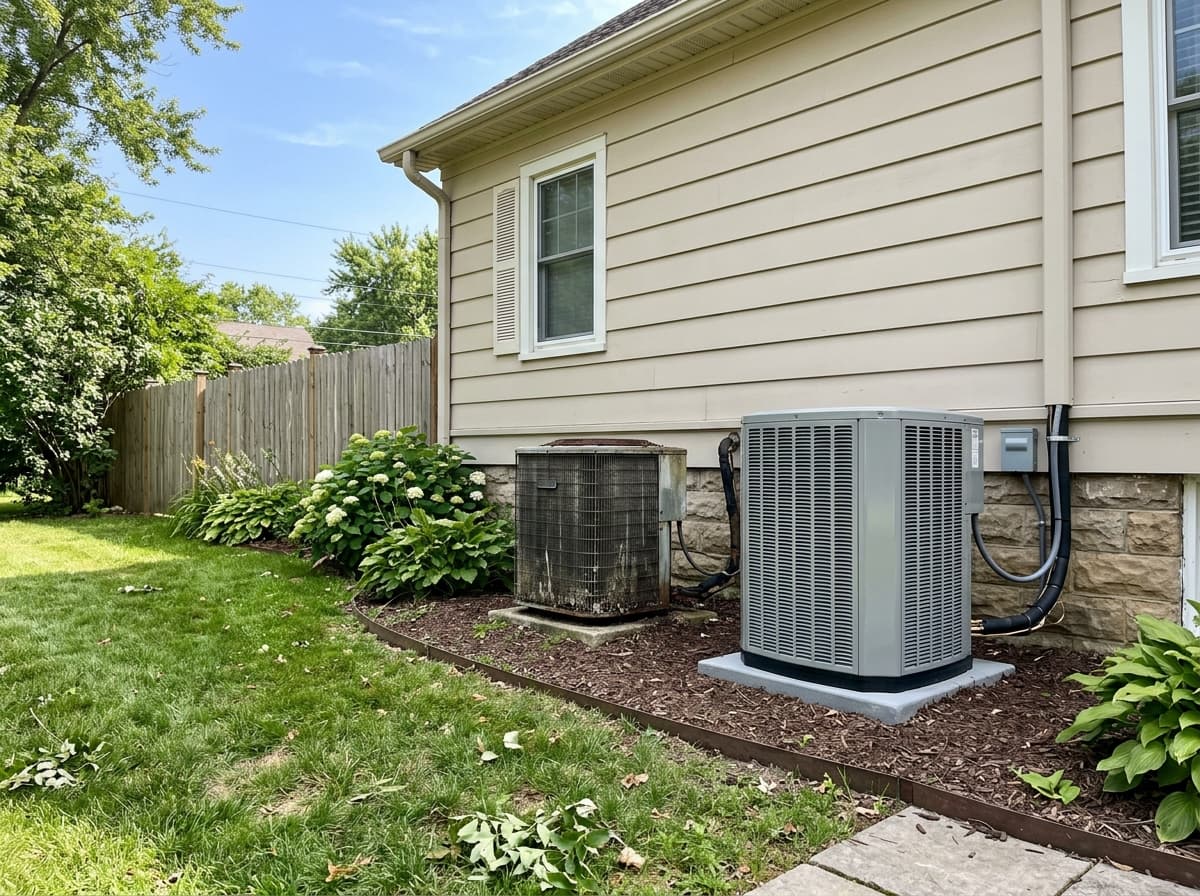
We see a lot of AC not blowing cold air calls in Portland that come down to a dirty or blocked outdoor condenser. Our mossy, leafy yards and cottonwood fluff are hard on these units.
3. Dirty or blocked condenser coil
Your outdoor unit’s job is to dump indoor heat outside. If the fins are clogged with dirt, leaves, or cottonwood, it can’t release heat properly—and your air conditioner not cooling is the result.
What to look for:
- Thick layer of dirt, grass clippings, or cottonwood on the coil
- Shrubs or fencing blocking airflow within 1–2 feet of the unit
- Hot air not blowing strongly out the top or side when running
Safe homeowner cleaning steps:
- Turn off power at the disconnect box by the condenser or at the breaker.
- Gently clear away leaves, weeds, and debris.
- Use a garden hose (low–medium pressure) to rinse from the inside out, if you can access it, or gently from top to bottom.
- Avoid pressure washers and harsh chemicals, which can flatten fins or push dirt deeper.
Northwind tip: Keep at least 2 feet of clearance around the condenser and trim back plants each spring. In Portland’s lush yards, we often find units completely surrounded by overgrown shrubs.
Turn the power back on and run the AC. If it still struggles to cool, the problem may be deeper.
4. Is the outdoor fan and compressor running?
Go outside while the thermostat is calling for cooling and listen carefully.
You might notice:
- Indoor blower on, outdoor unit silent:
- Could be a tripped breaker, bad contactor, or failed capacitor.
- Outdoor fan spinning, but a louder “compressor hum” missing:
- Often points to a compressor or capacitor issue.
- Clicking, buzzing, or repeated on-off behavior:
- Control or electrical problem.
Check your breaker (safe)
- Find your electrical panel.
- Look for the breaker labeled
AC,Condenser, or similar. - If it’s tripped (in the middle), switch it fully
OFF, then backONonce.
If it trips again quickly, do not keep resetting it. That suggests a short or failing component that needs professional attention.
When to call a pro immediately:
- Outdoor unit hums but won’t start, or starts then stops.
- Breaker keeps tripping.
- You smell burning or see scorch marks at the disconnect or panel.
These are classic signs of a failed capacitor, motor issue, or wiring problem. A NATE-certified technician can safely test and replace these parts.
Step 4: Low refrigerant or a refrigerant leak
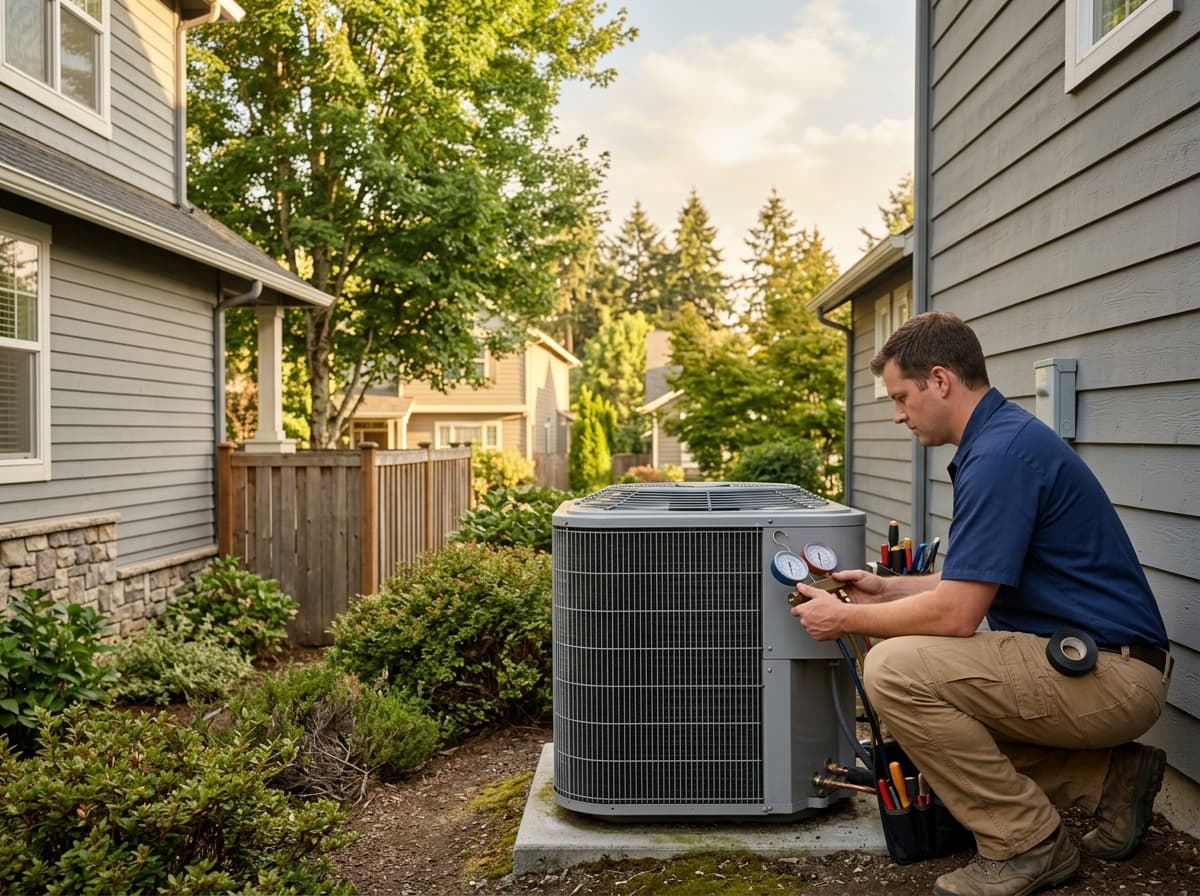
If your system is running but your AC is blowing warm air or just “cool-ish” air, low refrigerant is a likely suspect—especially in older systems around Portland that have never had a major repair.
Signs of low refrigerant
- Air from vents is cool but not cold, and never reaches set temperature.
- System runs for very long cycles, especially during heat waves.
- Ice on the refrigerant lines or outdoor unit.
- Higher-than-normal summer energy bills without better comfort.
Refrigerant doesn’t get “used up” like gas in a car. If it’s low, there’s either a leak or a previous charge was incorrect.
Why you shouldn’t DIY refrigerant issues
Handling refrigerant requires EPA certification and specialized gauges. Simply “topping off” without fixing a leak:
- Wastes money as the refrigerant leaks back out.
- Can damage the compressor.
- Is not permitted for many types of leaks under current regulations.
When to call a pro:
If you suspect low refrigerant at all, shut the system down and schedule air conditioning service. A pro should:
- Inspect for visible oil stains and corrosion.
- Perform leak detection.
- Discuss repair vs. replacement based on system age and severity of leak.
For older Portland homes with 15–20-year-old systems, it’s often smarter long-term to invest in a new, more efficient unit rather than repeatedly refilling a leaking one.
Step 5: Electrical and capacitor problems
Inside your outdoor unit is a small but critical component called a capacitor. It helps the compressor and fan motor start and run. When it fails, your system may:
- Hum but not start.
- Start, then shut off quickly.
- Trip the breaker.
Signs of a bad capacitor or contactor (for awareness)
- Loud humming from the outdoor unit without the fan moving.
- Fan blades can be pushed with a stick and then start (do not try this yourself; it’s dangerous and not recommended).
- System cycles on and off rapidly.
These issues can absolutely lead to an AC not blowing cold air or no cooling at all.
Northwind tip: Electrical components often fail during the first big heat wave of the season in Portland, when systems go from sitting idle all spring to running nearly nonstop.
What you should and shouldn’t do
Safe for homeowners:
- Check and reset the breaker once.
- Confirm that no one has turned off the outdoor disconnect.
Not safe for homeowners:
- Opening the outdoor unit panel.
- Testing capacitors with a meter.
- Bypassing safety switches or fuses.
If you suspect an electrical issue, turn the system off and use our same-day service request form, especially during extreme heat.
Step 6: Undersized or aging system
Sometimes your AC is technically “working,” but still can’t keep up—especially in newer, hotter Portland summers with more 90°+ days.
Signs your system is undersized
- It runs all day during hot afternoons and still can’t reach your thermostat setpoint.
- Some rooms (often upstairs or south-facing) are always several degrees warmer.
- The system works fine on 75–80° days but falls behind in the high 80s or 90s.
In older Portland homes, we frequently see:
- Systems sized for the climate 20 years ago, not today’s heat waves.
- Additions or finished basements without updating the HVAC sizing.
- Ductwork not designed for current layout, leading to airflow imbalance.
Signs your system is at end-of-life
Most central AC systems last 12–18 years with regular maintenance. You may notice:
- Frequent repairs, especially compressors, motors, and refrigerant leaks.
- Rising energy bills even with similar usage.
- Noisy operation, rattling, or vibration.
If your AC blowing warm air coincides with one of these and your unit is 15+ years old, it’s worth comparing repair vs. replacement.
When to call a pro:
Ask for a load calculation and system evaluation. A reputable contractor will:
- Measure your home’s size, insulation, windows, and ductwork.
- Check current system capacity vs. actual needed capacity.
- Discuss options like duct adjustments, zoning, or higher-efficiency replacements.
At Northwind Heating & Cooling, we often find that modest duct or airflow tweaks, plus a properly sized replacement, can solve years of “never quite cool enough” frustration.
Step 7: Ductwork and airflow issues
Even if the AC equipment is fine, poor duct design or damage can make it feel like your air conditioner is not cooling.
Common Portland-area duct problems:
- Disconnected or leaking flex duct in crawlspaces or attics.
- Crushed or kinked ducts from storage or past work.
- Uninsulated ducts running through unconditioned spaces.
Signs you might have duct issues:
- One or two rooms much warmer than the rest.
- Weak airflow from some vents, strong from others.
- Musty or crawlspace-like smells when the AC runs.
Homeowner checks:
- Make sure vents and returns are open and not blocked.
- Do a “hand test” for airflow at different rooms and note major differences.
Duct repairs usually require a pro, especially in tight Portland crawlspaces. During air conditioning service, we often include a basic duct inspection, especially if your comfort issues are room-specific.
Quick troubleshooting checklist
Use this list to narrow down your AC blowing warm air problem before you call:
- Thermostat
- Mode on
COOL - Fan on
AUTO - Temperature set below room temp
- Mode on
- Filter
- Clean or new filter installed
- Indoor unit
- Strong airflow from vents?
- Any ice on refrigerant lines or unit?
- Outdoor unit
- Fan spinning and unit running?
- Clear of debris and plants?
- Breaker
- AC breaker not tripped?
If everything above looks good but the air is still not cold, it’s time for a professional diagnosis.
How Portland’s climate affects AC performance
Portland used to be known for mild summers. Lately, we’ve seen:
- More heat domes and multi-day stretches in the 90s and 100s.
- Higher overnight lows, so homes don’t cool off as much at night.
- More smoke events, which affect air quality and filters.
This means older, marginal systems that used to be “good enough” now get overwhelmed. It also means:
- Filters clog faster from smoke and dust.
- Outdoor units run harder and longer.
- Undersized or poorly maintained systems show their weaknesses sooner.
If you find yourself turning the thermostat lower and lower with no real improvement, that’s a sign the system and/or duct design needs to be reevaluated.
When to shut your AC off and call immediately
Keep everyone safe and protect your equipment by turning the system off and calling a professional if:
- You smell burning, see smoke, or hear popping from the equipment.
- The breaker trips repeatedly.
- There is heavy ice buildup on lines or equipment.
- You see sparks, exposed wiring, or damaged insulation.
- The system is making new, loud noises (screeching, grinding, banging).
You can call your local contractor or use our same-day service request for urgent cooling issues.
Why work with a local Portland HVAC pro
A local, experienced contractor brings context that online generic troubleshooting guides miss. At Northwind Heating & Cooling, we’ve been working on AC systems across Portland, Washington & Clackamas counties, and SW Washington since 1979, so we’re familiar with:
- Older Eastside bungalows with patchwork ductwork
- West Hills homes with multi-story comfort challenges
- Newer suburban homes in Happy Valley, Beaverton, and Vancouver with builder-grade systems
Our NATE-certified technicians are trained to:
- Separate simple thermostat or filter issues from serious electrical or refrigerant problems.
- Prioritize repairs that protect your system’s lifespan.
- Offer honest, straightforward advice about whether to repair or replace.
We’re fully licensed and insured (OR CCB #219847), and we offer $0-down financing options on approved credit if a major repair or replacement is the right next step.
Final thoughts: Don’t wait out the next heat wave
If your AC is blowing warm air, you don’t have to guess your way through the problem or sweat through the next Portland heat wave. Start with the safe checks in this guide—thermostat settings, filter, visible ice, outdoor unit airflow. If your system is still not blowing cold air after that, it’s time for a professional diagnosis.
Northwind Heating & Cooling is here to help Portland-metro homeowners stay safe and comfortable all summer. Call us at (503) 555-0198 or request same-day service online, and we’ll help you figure out whether it’s a simple fix, a repair, or a bigger upgrade to keep your home cool for years to come.