Portland’s weather doesn’t stay in one lane for long. One week it’s raining sideways, the next you’re wishing you had turned the AC on yesterday. A practical, seasonal HVAC maintenance checklist makes it much easier to stay ahead of those swings so your system is ready when the weather changes—not a week afterward.
Below is a simple, Portland-specific game plan: what you can safely do yourself each month, what should happen every spring and fall, and when it’s time to call in a pro for a thorough furnace tune-up or AC tune-up.
Key takeaways
- Do light DIY checks monthly; schedule professional tune-ups once a year for heating and once a year for cooling.
- Regular maintenance keeps your system efficient, reduces surprise breakdowns, and often protects your manufacturer warranty.
- Spring = focus on cooling and drainage; fall = focus on heating safety and reliability.
- Use a written HVAC maintenance checklist and add reminders to your calendar so tasks actually get done.
- In Portland’s damp climate, airflow and drainage issues are just as important as temperature control.
Why seasonal HVAC maintenance matters in the Portland metro
The Portland metro’s climate is unique:
- Mild but wet winters with plenty of damp, chilly days
- Dry, increasingly hot summer spells, often with wildfire smoke
- Long shoulder seasons where you might use both heat and AC in the same week
That mix is hard on equipment. Your outdoor unit sits in constant moisture, fall leaves clog drains, and filters load up fast from pollen and smoke. A consistent HVAC maintenance schedule helps you:
- Catch small issues before they become big repairs
- Maintain safer operation of gas furnaces
- Keep energy use (and bills) under control
- Improve indoor air quality, especially during smoke season
Pro tip from the field: Most major HVAC repairs we see in peak season started as small, preventable issues that would have been caught during a routine tune-up.
If you’ve ever had your furnace die on the first cold snap or your AC quit during a heat wave, you already know how valuable a little preparation can be.
How maintenance affects efficiency, lifespan, and warranty
Well-maintained systems don’t just “run better”—they tend to:
- Use less energy. A dirty blower wheel, clogged filter, or low refrigerant level forces the system to work harder for the same comfort.
- Last longer. Keeping motors, burners, and coils clean reduces wear and tear.
- Break down less often. Tune-ups catch worn components before they fail on the hottest or coldest day of the year.
- Stay within warranty requirements. Many equipment manufacturers require annual professional maintenance and proof of service to keep parts warranties valid.
If your furnace or heat pump is still under warranty, check the paperwork. You’ll often see language requiring yearly service by a licensed contractor. Keep your invoices; they’re your proof if a major component fails.
Your seasonal HVAC maintenance checklist at a glance
Use this table as a quick planning tool for what you should do each spring and fall. We’ll break each item down in more detail below.
| Season | System Focus | Homeowner Tasks | Professional Tasks |
|---|---|---|---|
| Spring | Cooling (AC/heat pump) | Change air filter; clear debris from outdoor unit; test cooling mode; check supply vents; clean return grilles | AC or heat pump tune-up; coil cleaning; refrigerant check; electrical and safety checks; drain line inspection and cleaning |
| Fall | Heating (furnace/heat pump) | Change air filter; vacuum around furnace; test heat mode; check carbon monoxide alarms; visually check outdoor unit before heavy storms | Furnace tune-up; burner and heat exchanger inspection; safety controls testing; combustion analysis (gas); verify venting and flue; full system check |
Consider printing this and sticking it on your fridge or saving it to your phone with calendar reminders.
Monthly & quarterly tasks homeowners can handle
You don’t need to be a technician to keep an eye on your system. These simple steps, done regularly, make a big difference.
1. Change or clean your filters
- How often: Every 1–3 months depending on filter type, pets, and allergy concerns.
- Why it matters: A clogged filter is one of the most common causes of poor airflow, higher bills, and frozen AC coils.
- Portland-specific tip: During wildfire smoke events or heavy pollen season, you may need to change filters more frequently.
Look for the filter size printed on the frame (e.g., 16x25x1). Install the new one with the arrows pointing toward the furnace or air handler.
2. Keep vents and returns clear
Walk around your home and check:
- Supply vents are open and not blocked by rugs, furniture, or curtains
- Return grilles (usually larger wall or ceiling grilles) are free of dust buildup
Use a vacuum with a brush attachment to gently clean grilles. Closing too many vents can create pressure issues and noise, and may even shorten the life of your system.
3. Listen, look, and sniff
Once a month, take a minute to:
- Listen for new or unusual noises: banging, screeching, grinding, or rattling
- Look for water around the indoor unit or ice on refrigerant lines
- Sniff for burning, chemical, or musty odors
If you notice any of these, it’s time to schedule service rather than waiting for your next tune-up.
4. Check your thermostat
Every month or two:
- Make sure the thermostat is level and firmly attached
- Replace batteries annually if it’s battery-powered
- Verify programmed schedules match your current routine
Smart and programmable thermostats can save energy, but only if they’re set up correctly.
Spring HVAC maintenance checklist: cooling season prep
When Portland finally starts to dry out and you’re opening windows again, it’s time to get your cooling system ready.
DIY spring tasks
-
Change the filter
- Start the cooling season with a fresh filter.
-
Clear and clean the outdoor AC or heat pump unit
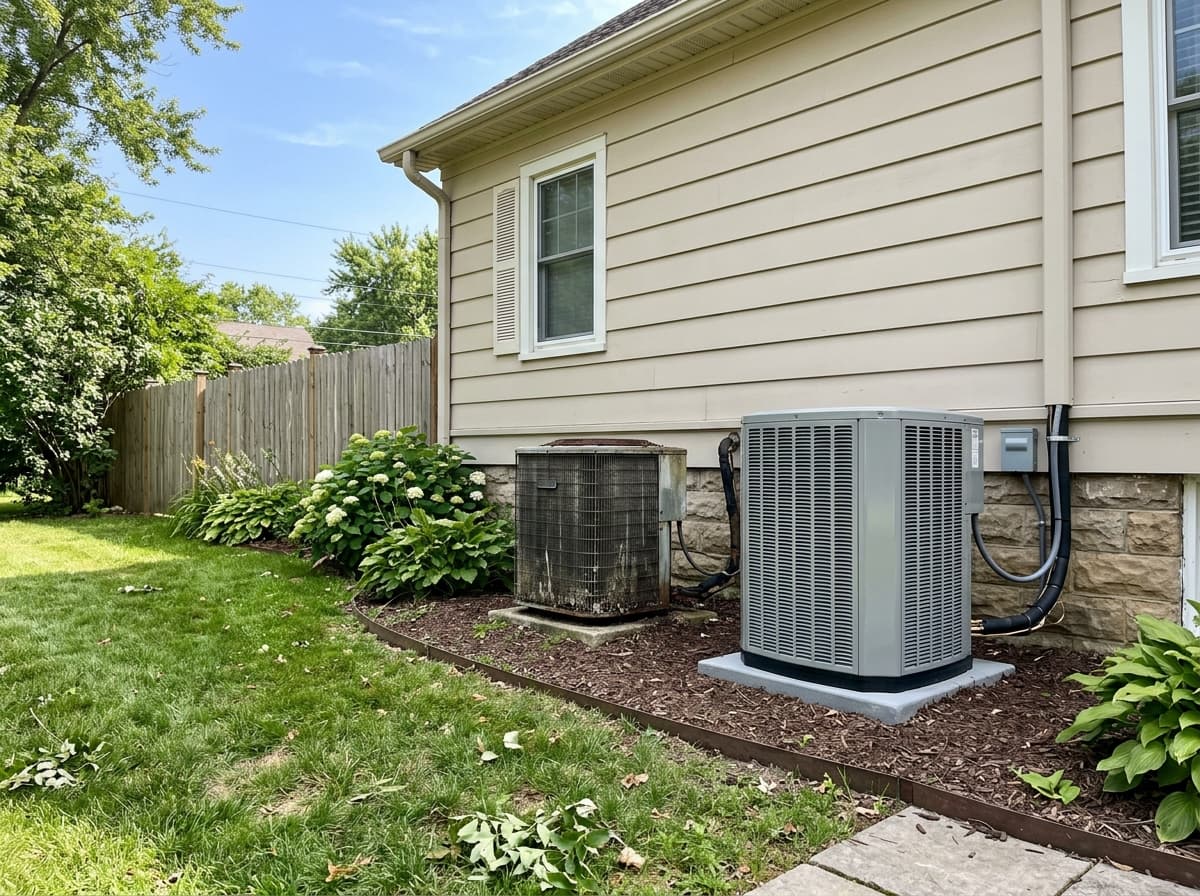
- Gently remove leaves, twigs, and other debris from around the unit.
- Maintain 2–3 feet of clearance on all sides and 4–5 feet above.
- Trim back shrubs and plants so they don’t restrict airflow.
-
Visually inspect the outdoor coil and cabinet
- Look for visible damage, bent fins, or heavy dirt and cottonwood fluff.
- Don’t use a pressure washer—it can damage fins. Light garden hose rinsing is okay if done gently from top-down, but deeper cleaning is best left to a pro.
-
Test your system before the first heat wave
- Set the thermostat to “cool” and lower the temperature.
- Verify cool air is coming from vents and the outdoor unit is running.
- Let it run for 10–15 minutes to ensure it cycles properly.
If the system doesn’t start, blows warm air, or short-cycles, schedule service before the next 95°F forecast.
Professional spring AC tune-up tasks
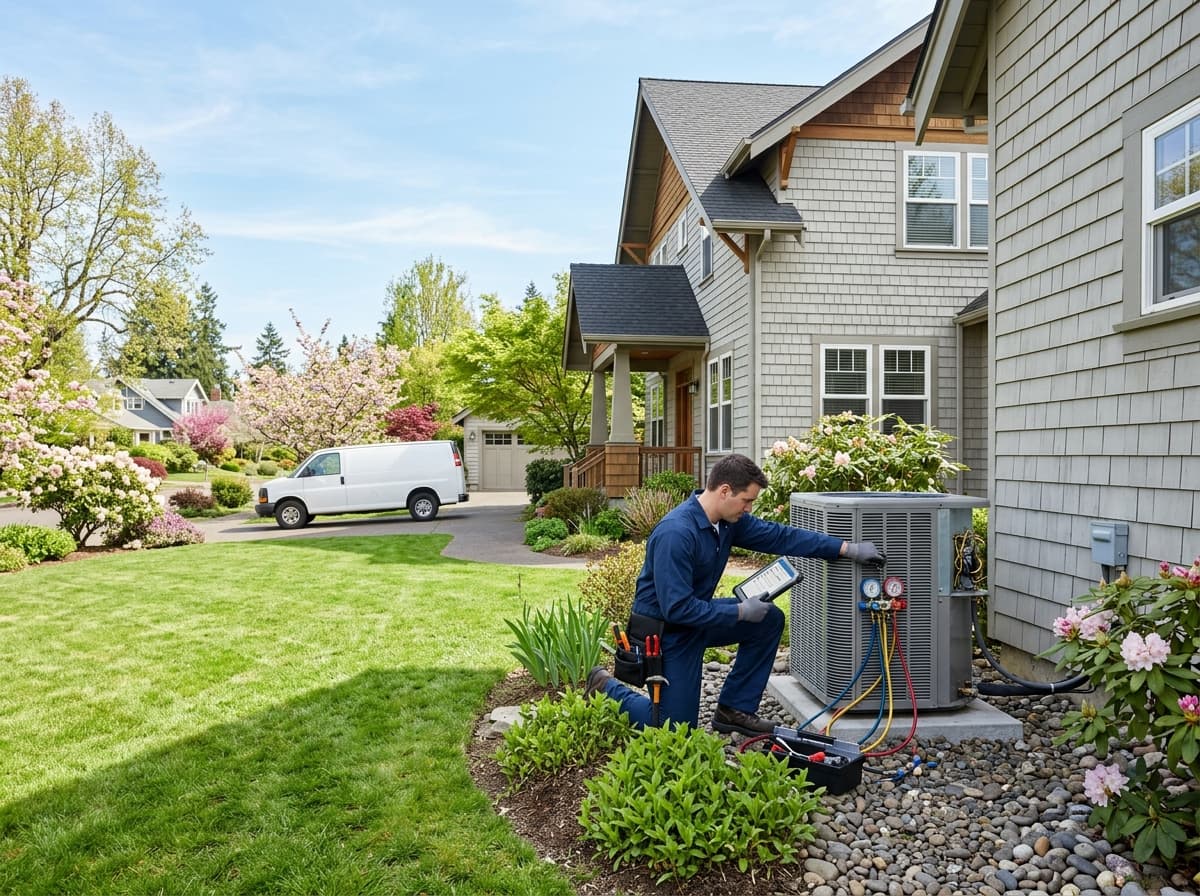
During a professional AC tune-up or heat pump cooling check, a technician will typically:
- Inspect and clean the outdoor condenser coil
- Check refrigerant levels and look for signs of leaks
- Test capacitors, contactors, and other electrical components
- Measure temperature difference (supply vs. return air)
- Inspect blower components and motor amps
- Verify thermostat operation and calibration
- Check condensate drain and pan for clogs or algae growth
In Portland’s damp climate, the condensate drain is a common trouble spot. When it clogs, you can end up with water damage near the furnace or air handler, especially if it’s in a finished basement or closet.
If your AC is older, your tech may also talk with you about efficiency, refrigerant type, and realistic expectations for the remaining life of the unit.
To learn more about what’s included during cooling service, see our dedicated page on AC service and repair.
Fall HVAC maintenance checklist: heating season prep
As the first real rains return and nights drop into the 40s, your furnace or heat pump becomes the star of the show. Fall is the time to focus on safety and reliability.
DIY fall tasks
-
Change the filter (again)
- Summer dust and smoke can load filters quickly. Start heating season with a clean filter.
-
Vacuum and tidy around the furnace
- Keep at least 2–3 feet of clearance around the unit.
- Don’t store paint, gasoline, or other flammables near the furnace or water heater.
-
Test your heat before the first real cold snap
- Switch the thermostat to “heat” and set it a few degrees higher than room temperature.
- Listen for normal startup and watch for any unusual smells after the first few minutes.
- A brief dusty smell the first time you run the heat can be normal as dust burns off, but it should fade quickly.
-
Check carbon monoxide (CO) and smoke alarms
- Test alarms and replace batteries if needed.
- If your home doesn’t have CO alarms, adding them is one of the most important safety upgrades you can make.
Professional fall furnace tune-up tasks
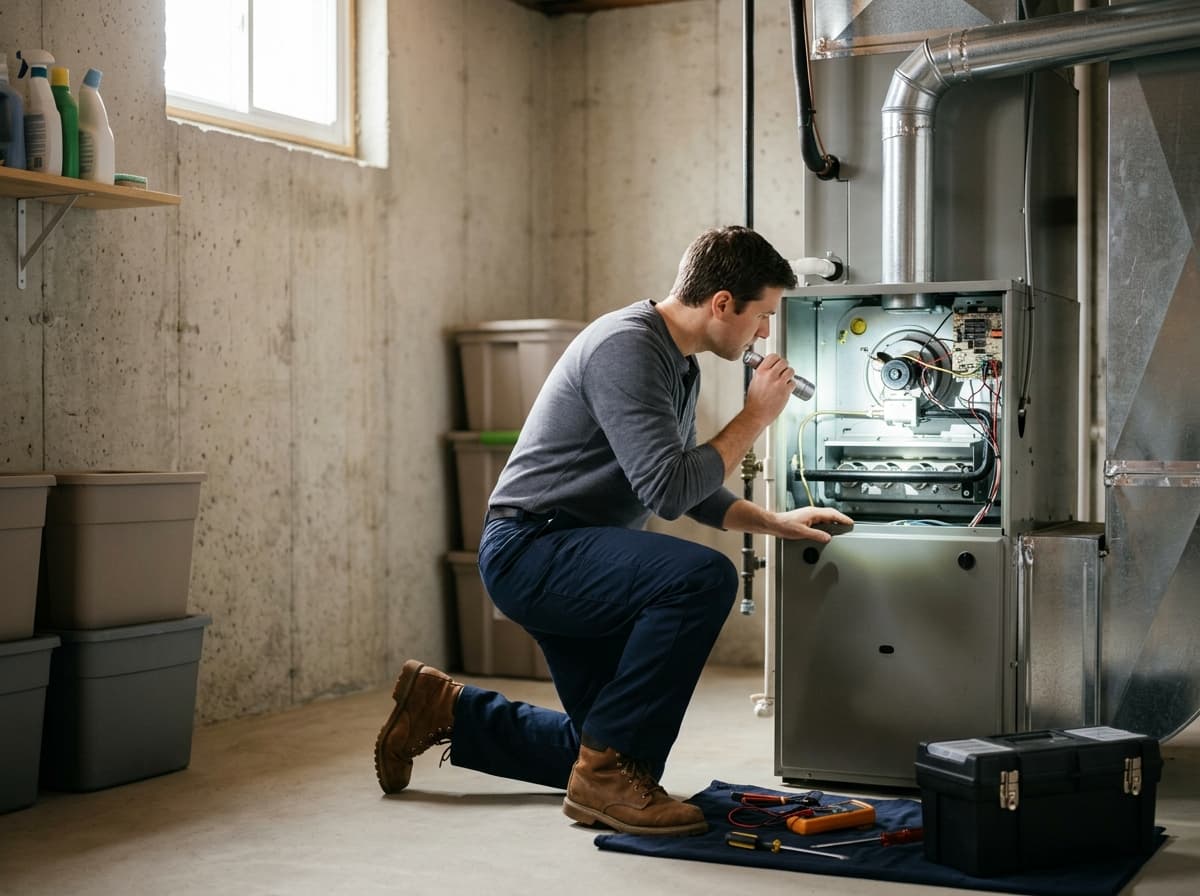
A professional furnace tune-up (or heat pump heating check) should include safety-critical steps that homeowners can’t do on their own. Typical tasks include:
- Inspect and clean burners and flame sensor
- Check ignition system and verify proper startup sequence
- Examine heat exchanger for visible cracks or damage
- Test safety controls and limit switches
- Perform combustion analysis on gas furnaces (where appropriate)
- Verify flue and venting are intact and not obstructed
- Check gas pressure and connections for leaks
- Inspect blower assembly and motor
- Confirm proper airflow and temperature rise
For heat pumps, your technician will also verify the defrost cycle, reversing valve operation, and auxiliary heat strips.
Because heating safety is so important, we strongly recommend an annual professional check for any fuel-burning system. Learn more about our heating service options.
DIY vs. professional maintenance: who should do what?
Some tasks are perfect for handy homeowners; others really do require tools, training, and safety knowledge. Here’s a simple breakdown.
DIY vs. pro HVAC maintenance comparison
| Task | DIY-Friendly? | Recommended Frequency | Notes |
|---|---|---|---|
| Change air filter | Yes | Every 1–3 months | Make sure the system is off while swapping filters. |
| Clear debris around outdoor unit | Yes | Monthly in fall/spring | Avoid bending fins or opening panels. |
| Clean supply and return grilles | Yes | Quarterly | Use a vacuum; don’t push debris into ducts. |
| Thermostat programming and battery changes | Yes | 1–2 times per year | Check user manual for specific instructions. |
| Inspect and clean condensate drain line | Usually pro | Annually | Access can be tight; clogs may need specialized tools. |
| Deep coil cleaning (indoor/outdoor) | Pro | Annually or as needed | Improper cleaning can damage coils or cause leaks. |
| Electrical testing (capacitors, contactors, etc.) | Pro | Annually | Requires meters and safety training. |
| Combustion analysis and gas pressure checks | Pro | Annually | Critical for furnace safety and efficiency. |
| Refrigerant check and charging | Pro | As needed | Legally and practically a professional-only task. |
If you’re ever unsure whether a maintenance task is safe to DIY, err on the side of calling a professional. HVAC equipment involves electricity, gas, and refrigerants—three things that can go wrong quickly without the right training.
Building a realistic HVAC maintenance schedule
You don’t need a complicated spreadsheet to keep your system in shape. A simple, repeatable plan is usually best.
Annual rhythm for Portland homeowners
-
Every month
- Check filter and replace if dirty.
- Make sure vents and returns are unblocked.
-
Every spring (March–May)
- Complete the DIY spring checklist.
- Schedule a professional AC or heat pump cooling tune-up.
-
Every fall (September–November)
- Complete the DIY fall checklist.
- Schedule a professional furnace or heat pump heating tune-up.
-
Every 2–3 years
- Consider a duct inspection, especially in older Portland homes where ducts may be in crawlspaces.
- Review your thermostat settings to match any changes in your household routine.
Coordinating with tune-up specials
Many HVAC companies, including ours, run seasonal promotions for maintenance. If your schedule is flexible, it can be smart to:
- Book spring AC tune-ups before the first major heat wave is in the forecast.
- Schedule fall furnace tune-ups before the first freezing night.
You can check our current specials and tune-up offers anytime to see what’s available. Just keep in mind that promotions can change, and the best value is still preventing a major mid-season breakdown.
How maintenance protects indoor air quality
In the Portland metro, we’ve seen more smoke-filled summers and longer allergy seasons. Your HVAC system plays a major role in your home’s air quality.
Regular maintenance helps:
- Keep filters working as designed, trapping more dust and pollen
- Prevent mold growth in damp areas like coils and drain pans
- Ensure good airflow so your air cleaner (if you have one) can do its job
If anyone in your home has asthma or allergies, ask your technician about:
- Upgrading filter efficiency (without over-restricting airflow)
- Whole-home filtration or air cleaners
- Best practices for running your system during wildfire smoke events
Signs your system needs attention before the next season
You don’t have to wait for your next tune-up if something feels off. Call for service if you notice:
- Hot and cold spots that weren’t there last year
- System running much longer to reach the same temperature
- Sudden jump in utility bills without a rate increase
- Frequent on/off cycling
- Unusual noises on startup or shutdown
- Burnt, musty, or chemical smells from vents
Catching these issues early is almost always more affordable than waiting for a complete breakdown.
When it might be time to think beyond maintenance
Even with perfect maintenance, no system lasts forever. In our experience around Portland:
- Most furnaces last roughly 15–20 years
- Most central AC units last around 12–17 years
- Heat pumps typically fall somewhere in between, depending on usage
You might want to discuss replacement options during a tune-up if:
- Your system is past those age ranges
- You’ve had multiple repairs in the last couple of years
- Your home still feels uncomfortable despite good maintenance
- Your equipment uses older, phased-out refrigerants
A good technician will give you straight answers about whether repairs or replacement make more sense for your situation—not just this year, but over the next 3–5 years.
Local know-how: Portland-specific tips
A few bonus tips we’ve learned after decades of working on systems across Multnomah, Washington, and Clackamas counties, plus SW Washington:
- Mind the moss and leaves. Our climate is perfect for moss growth and thick leaf fall. Keep an eye on outdoor units near cedar fences, shady yards, or big deciduous trees.
- Check crawlspace access. Many older Portland homes have furnaces or ductwork in tight crawlspaces. Make sure the access hatch is clear and safe to reach before your tune-up appointment.
- Consider surge protection. Power blips during winter storms or summer heat waves can be rough on modern electronics in furnaces and heat pumps.
- Plan around road and bridge closures. If you live in an area frequently impacted by construction or snow/ice, try to schedule maintenance well before severe weather.
You can see if your home is in our service range on our service area page.
Bringing it all together
A good HVAC maintenance checklist doesn’t need to be complicated. If you:
- Change filters regularly
- Keep vents clear and equipment areas tidy
- Complete simple seasonal checks
- Schedule a professional furnace tune-up in the fall and an AC tune-up in the spring
…you’ll be ahead of most homeowners, and your system will likely reward you with fewer surprises and more consistent comfort.
If you’d like help setting up a maintenance routine, or you’re ready to schedule your next tune-up, our NATE-certified, licensed and insured team (OR CCB #219847) is here to help. Call Northwind Heating & Cooling at (503) 555-0198 or reach out through our contact page to request a visit or learn about our current $0-down financing and same-day service options.