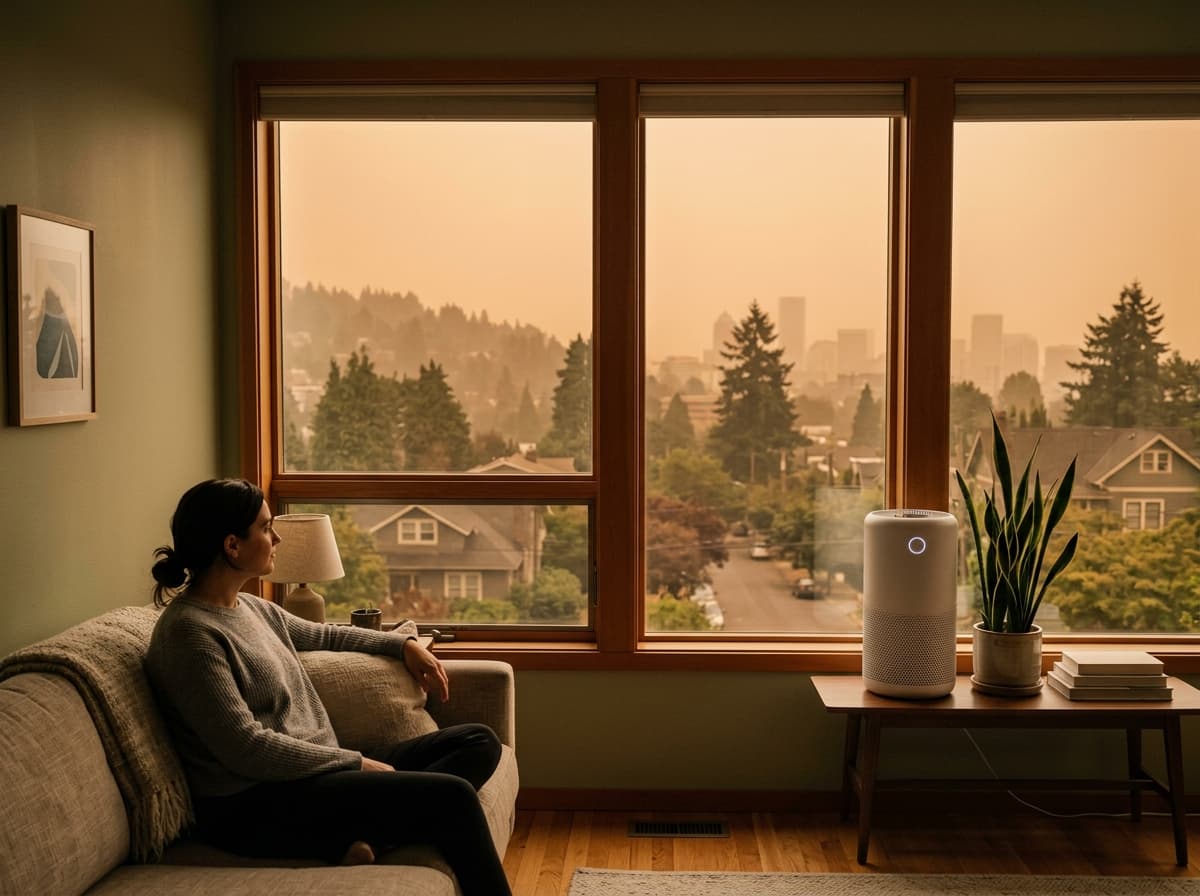
Every August now seems to arrive with a familiar haze over the West Hills. The windows stick from heat, the sky turns orange, and your phone buzzes with air quality alerts. If you’re wondering what all of this wildfire smoke means for your indoor air quality—and whether your HVAC system is helping or hurting—you’re not alone.
For Portland-area homeowners, managing wildfire smoke indoor air quality has become part of summer and early fall life. The good news: with the right filters, settings, and a little planning, you can keep the air in your home significantly cleaner, even when the Willamette Valley is socked in with smoke.
Key takeaways
- During wildfire smoke events, keep windows closed and set your HVAC system to recirculate instead of pulling in outside air.
- Aim for at least MERV 13 filtration for smoke if your system can handle it; use HEPA in portable or bypass systems where needed.
- Watch PM2.5 or AQI; many families start smoke protocols when AQI exceeds 100–150.
- Seal leaky ductwork and home envelope to prevent smoky outdoor air from bypassing your filters.
- Consider a mix of whole-home filtration and portable HEPA units for bedrooms and high-use spaces.
Wildfire smoke in the PNW: why it’s different than a “bad air day”
Portland used to get a handful of hazy days a year; now, late summer smoke from the Gorge, the Coast Range, and even British Columbia can linger for days or weeks. Our usual pattern is:
- Hot, dry east winds that pull smoke from inland fires
- Temperature inversions that trap smoke in the Willamette Valley
- Days where opening the windows for a breeze just isn’t safe for sensitive lungs
Unlike typical urban smog, wildfire smoke is packed with fine particulate matter (PM2.5)—tiny particles 2.5 microns or smaller that can penetrate deep into the lungs and even enter the bloodstream.
Who is most at risk in your household?
Wildfire smoke affects everyone, but it hits some family members harder:
- Kids and teens – their lungs are still developing, and they breathe more air per pound of body weight.
- Older adults – especially those with heart or lung conditions.
- Anyone with asthma, COPD, or allergies – smoke can trigger attacks and flare-ups.
- Pregnant people – exposure has been linked to complications.
Even healthy adults often report headaches, fatigue, or trouble sleeping on smoky days. That’s why planning for smoke season isn’t overkill—it’s basic home health care.
“Think of wildfire season like a winter storm. You wouldn’t wait for the snow to start before checking your furnace—don’t wait for the first smoky day to check your filters and settings.”
Understanding AQI and when to act
You’ll hear a lot about AQI (Air Quality Index) during wildfire season. In the Portland area, look specifically at PM2.5 AQI, not just “overall air quality.”
Here’s a simplified guide to when Portland homeowners often change their indoor air strategy:
| PM2.5 AQI Level | Category | What Portland Homeowners Commonly Do |
|---|---|---|
| 0–50 | Good | Open windows, natural ventilation |
| 51–100 | Moderate | Sensitive folks start closing windows more often |
| 101–150 | Unhealthy for Sensitive Groups | Close windows, set HVAC to recirculate, use better filters |
| 151–200 | Unhealthy | Whole-home filtration plus portable HEPA in key rooms |
| 201+ | Very Unhealthy / Hazardous | Stay indoors with doors/windows closed, minimize cooking and vacuuming |
You can track local AQI and PM2.5 via apps like AirNow, PurpleAir, or even some local news outlets’ weather pages.
Filtration 101: MERV vs HEPA for wildfire smoke
When it comes to wildfire smoke indoor air quality, three letters matter a lot: MERV and HEPA.
- MERV (Minimum Efficiency Reporting Value) is the rating system for HVAC filters.
- HEPA (High-Efficiency Particulate Air) is a higher, more stringent standard used in many portable air cleaners and some whole-home bypass systems.
How MERV ratings compare for smoke
Not every filter is up to the task of capturing tiny smoke particles. Here’s a practical MERV breakdown for Portland homes:
| Filter Type / MERV Rating | Typical Particle Size Capture | Wildfire Smoke Effectiveness | Common Uses in Homes |
|---|---|---|---|
| MERV 6–8 | 3–10 microns | Poor – misses most PM2.5 | Basic furnace protection, large dust |
| MERV 9–11 | 1–3 microns | Fair – some smoke, not ideal | Better dust, some allergens |
| MERV 13 | 0.3–1 microns | Good – solid for PM2.5 if system supports it | Recommended minimum for smoke-sensitive households |
| MERV 14–16 | 0.3 microns and larger | Very Good – high smoke capture | Advanced residential/ light commercial systems |
| HEPA (bypass or portable) | 0.3 microns at 99.97% efficiency | Excellent – best for PM2.5 | Portable units, dedicated whole-home bypass filters |
For wildfire smoke, most public health agencies and HVAC pros suggest aiming for at least MERV 13 where your equipment and ductwork can handle it.
Can every furnace handle MERV 13?
Not always. Higher MERV filters are denser, which means:
- More resistance to airflow
- Potential strain on the blower motor if the system wasn’t designed or adjusted for it
- Reduced comfort or even system damage if pushed too far
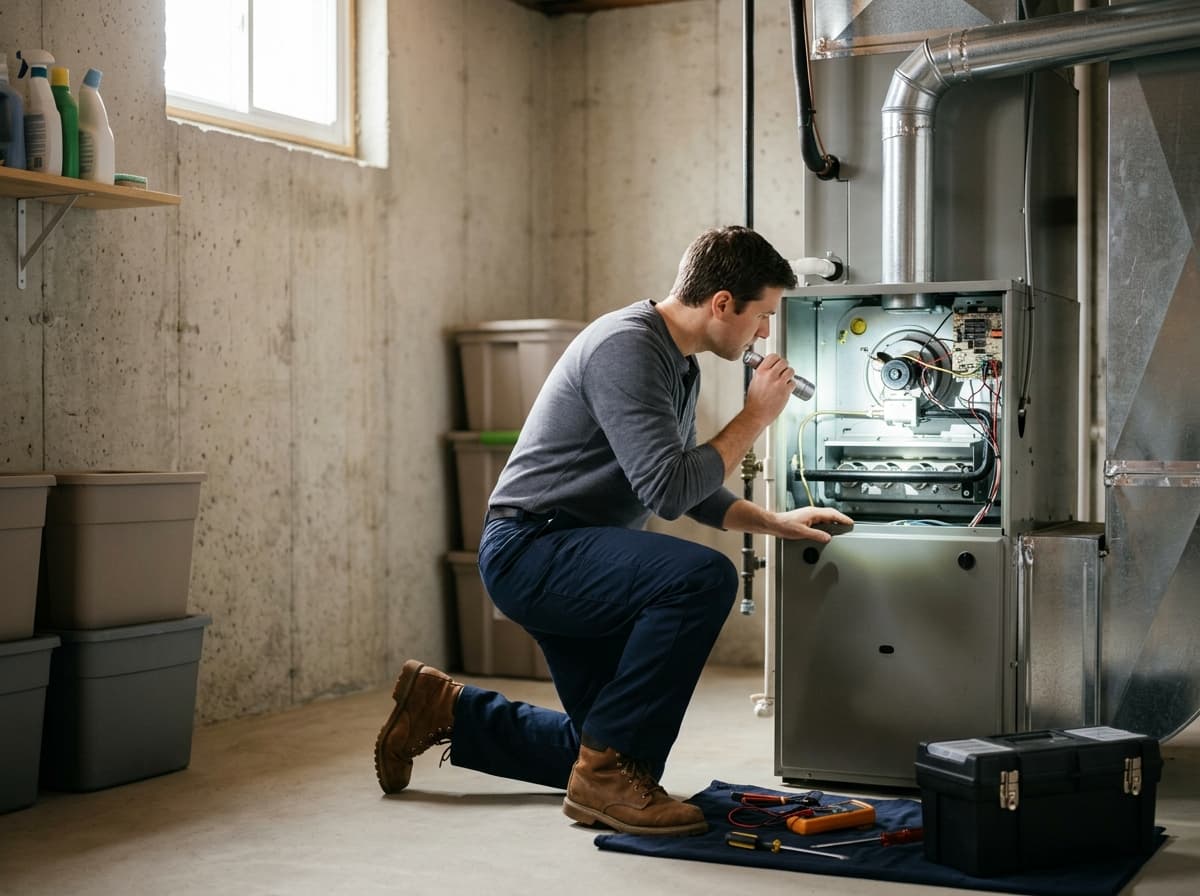
That’s why we often start with an equipment and duct evaluation. A properly sized, sealed duct system is more likely to support MERV 13+ without issues. If your system can’t, you may need to pair a moderate-MERV filter with HEPA air filtration through portable units or a bypass HEPA system that doesn’t choke your main airflow.
If you’re unsure what your system can handle, it’s worth having a pro take a look. Our team at Northwind can assess your equipment and recommend appropriate indoor air quality solutions for wildfire season.
MERV 13+ vs HEPA: which should you choose?
Let’s break down the tradeoffs you’re really dealing with.
Whole-home MERV 13–16 filtration
Pros:
- Cleans the air in every room served by your ductwork
- Uses existing HVAC blower and duct system
- Filters not just smoke, but dust, pollen, and many allergens
- No extra noise in bedrooms or living spaces beyond your normal system
Cons:
- Dependent on your furnace/air handler and duct design
- Higher MERV can mean more frequent filter changes
- May not reach basements, bonus rooms, or additions without ducts
This is a great baseline option when your system and ducts are in good shape.
Portable HEPA air purifiers
Pros:
- True HEPA offers excellent smoke particle removal
- Flexible—move to bedrooms at night, living areas by day
- No modifications to your existing HVAC system
Cons:
- Only clean the air in the room (or two) they’re rated for
- Add some noise—especially on higher fan speeds during heavy smoke
- Require periodic filter replacement, which can be pricey for high-quality units
If you rent, or your existing HVAC can’t handle a higher MERV filter, portable HEPA units are often the easiest way to meaningfully improve indoor air quality during smoke events.
Whole-home HEPA bypass systems
These systems tie into your ductwork, but air is pulled through a separate HEPA filter housing rather than pushed through it by your main blower.
Pros:
- HEPA-level filtration without overloading your furnace blower
- Truly whole-home coverage where ducts reach
- Can often run independently for filtration even when not heating or cooling
Cons:
- Higher upfront cost than portable units
- Requires professional installation and adequate space in the mechanical area
For families with asthma, COPD, or frequent smoke exposure, a bypass HEPA system plus well-sealed ductwork can be a game-changer.
The role of duct sealing during smoke season
Even a top-notch filter can’t help if smoky air is bypassing it.
In many Portland-area homes—especially older ones with crawlspaces—leaky ducts can:
- Pull smoky, dusty air from the crawlspace or attic into the supply air
- Lose cooled or heated air into unconditioned spaces, lowering comfort and efficiency
- Reduce the amount of air that actually passes through the filter
Professional duct sealing and repair can:
- Improve overall comfort and energy efficiency year-round
- Help ensure that during smoke events, more of the air circulating is actually getting filtered
- Reduce that “musty” or “earthy” smell that sometimes shows up when the fan first kicks on
If your system seems to blow more dust when it first starts, or some rooms never feel quite right, it may be time to look seriously at your ductwork and sealing options before the next wildfire season.
Fresh air vs filtration: what to do during smoke events
In a typical Portland summer, many of us rely on open windows, whole-house fans, or HRVs/ERVs for fresh air. But during wildfire smoke events, the priority shifts:
- Normal days: maximize fresh, outdoor air while maintaining comfort
- Smoky days: minimize outdoor air intake and focus on filtration and recirculation
HVAC settings: recirculate or bring in outside air?
Most central systems have some way of bringing in outdoor air—either via:
- A mechanical fresh air damper
- An HRV/ERV tied into the ductwork
- A “fan only” setting that may or may not include outdoor air, depending on the design
During heavy smoke:
-
Set your system to recirculate.
- Turn off any dedicated “fresh air” or “ventilation” modes that pull outside air directly in.
- If you have a visible outdoor air damper, your HVAC tech can show you how it’s set.
-
Run the fan continuously (or more often).
- Set the thermostat fan to “On” instead of “Auto” while smoke is bad, so air passes through the filter more frequently.
-
Use bathroom and kitchen exhaust fans strategically.
- Use them briefly to remove moisture and cooking particles, but don’t leave them running for hours during heavy smoke; they can pull in outdoor air to replace the exhausted air.
During severe smoke, prioritize clean filtered indoor air over “fresh” outdoor air. You can catch up on ventilation when the AQI improves.
Creating a “clean room” strategy
Sometimes, despite your best efforts, the entire home won’t get to the level of cleanliness you want—especially in drafty older houses or during extended smoke waves.
That’s where a clean room strategy comes in:
- Choose one or two key rooms – usually the primary bedroom and maybe a kids’ bedroom or family room.
- Close windows and doors to these rooms as much as practical.
- Use a properly sized HEPA air purifier on medium to high when smoke is heavy.
- Seal obvious gaps around window AC units or older windows with foam or weatherstripping.
- Avoid candles, incense, and heavy cleaning in these rooms during smoke events.
In many Portland homes, this approach offers a noticeable improvement in comfort and breathing, especially overnight.
Everyday habits that make wildfire smoke worse indoors
Even with great filtration, some common habits can load the air with extra particles—exactly what you don’t want during smoke season.
Try to limit these on high-smoke days:
- Cooking at high heat, especially frying or broiling
- Burning candles or incense
- Using wood-burning fireplaces or stoves
- Vacuuming without a HEPA vacuum (it can stir up more than it removes)
If you must cook:
- Use back burners when possible (closer to the range hood)
- Run the range hood on medium, but avoid marathon use during the worst smoke
- Consider batch cooking on cleaner air days and reheating with lower-emit methods like microwaves or toaster ovens
How often to change filters during wildfire season
Under normal conditions, many Portland homes can go 2–3 months between filter changes, depending on filter type and home conditions. Wildfire smoke changes that.
During or after smoke events:
- Inspect filters more frequently – every 2–4 weeks during an active smoke period.
- Replace if visibly gray or clogged, even if it’s earlier than usual.
- For MERV 13+ filters, expect shorter lifespans during heavy smoke since they’re catching so much fine particulate.
A heavily loaded filter not only reduces filtration performance, it can also:
- Strain your blower motor
- Reduce comfort and airflow to rooms
Think of filters as consumables—during wildfire season, you may go through more, but your lungs will thank you.
Balancing winter ventilation and smoke season needs
Portland’s climate throws us a curveball: we need good ventilation in the damp, mold-prone months, but we must restrict outdoor air during wildfire smoke.
This is where a tailored indoor air quality plan really shines:
- Winter and shoulder seasons: you may run HRVs/ERVs or use controlled fresh air intake to manage humidity, CO₂, and indoor pollutants.
- Summer wildfire season: you shift to recirculation and higher filtration, using portable HEPA where needed.
A well-designed system and controls strategy can adapt to both seasons without constant manual fiddling.
If you’d like a professional to look at the whole picture—equipment, ducts, ventilation, and filtration—our team can walk your home, review your goals, and suggest practical indoor air quality upgrades that make sense for our PNW climate.
When to call in a professional
You can do a lot on your own—like monitoring AQI, using portable HEPA units, and swapping filters more often. But some situations are worth a professional visit:
- You’re not sure if your system can support MERV 13+ safely.
- Certain rooms always feel stuffy or dusty, even with good filters.
- You have family members with asthma, COPD, or other respiratory issues.
- The system is older and you’re considering an upgrade anyway.
- You suspect major duct leakage (e.g., big temperature differences, visible gaps in ductwork, return ducts in dusty crawlspaces).
A qualified HVAC contractor can:
- Measure airflow and static pressure to see what your system can support.
- Evaluate duct sealing, sizing, and layout.
- Recommend filter options (and schedules) that make sense for your equipment.
- Design whole-home HEPA or advanced filtration systems that don’t compromise comfort.
If you’re in the Portland metro, Washington or Clackamas counties, or SW Washington, Northwind Heating & Cooling’s NATE-certified technicians are happy to help you book a consultation before the next smoke event.
Quick checklist: prepping your Portland home for wildfire season
Use this checklist in late spring or early summer, before the smoke arrives:
- Check your current filter rating (MERV level) and condition.
- Talk to a pro if you’re unsure about upgrading to MERV 13+.
- Stock up on extra filters appropriate for your system.
- Purchase or test portable HEPA units for key rooms.
- Identify and seal major air leaks around windows, doors, and wall penetrations.
- Consider duct inspection and sealing if your system is older or inconsistent.
- Learn your thermostat and system settings, including how to switch to recirculate and fan “On.”
- Bookmark AQI resources you trust for real-time local air quality.
When the forecast calls for smoke, you’ll be ready to focus on day-to-day comfort, not scrambling to find an air purifier in a sold-out hardware store.
Key takeaways for Portland homeowners
- Wildfire smoke is now a regular summer and early fall concern in the PNW; planning ahead matters.
- Aim for MERV 13 or better filtration if your system and ducts can handle it; supplement with HEPA (portable or bypass) if needed.
- During smoky days, close windows, switch to recirculate, and run the fan more often so air passes through your filters.
- Seal leaky ducts and big envelope gaps so smoky outdoor air has fewer ways to sneak indoors.
- Create at least one clean room with HEPA filtration for sensitive family members.
If you’d like help tailoring these ideas to your specific home, equipment, and family health needs, Northwind Heating & Cooling has been serving Portland-area homeowners since 1979. Call us at (503) 555-0198 or book a visit online to talk through practical options for keeping your indoor air cleaner during wildfire season and beyond.